

Setting the Stage: Why Solar Cooking Matters
Across Kenya, school kitchens remain the silent frontier of energy poverty. Every day, thousands of litres of beans, rice, and maize simmer for hours over smoky firewood stoves — consuming over 1 million tonnes of firewood annually and straining both school budgets and our forests. The result is familiar: rising costs, blackened kitchens, respiratory illness among cooks, and rapid deforestation that erodes our climate progress.
Yet a new paradigm is within reach — solar-powered cooking. By integrating solar energy into institutional kitchens, schools can replace outdated firewood systems with modern, reliable, and climate-smart solutions.
At Feion Green Ventures, we see this not just as a technological shift but a social transformation — one where sustainability, health, and education intersect to create dignified, efficient, and affordable school kitchens.
Why Solar + EPC Integration Changes the Game
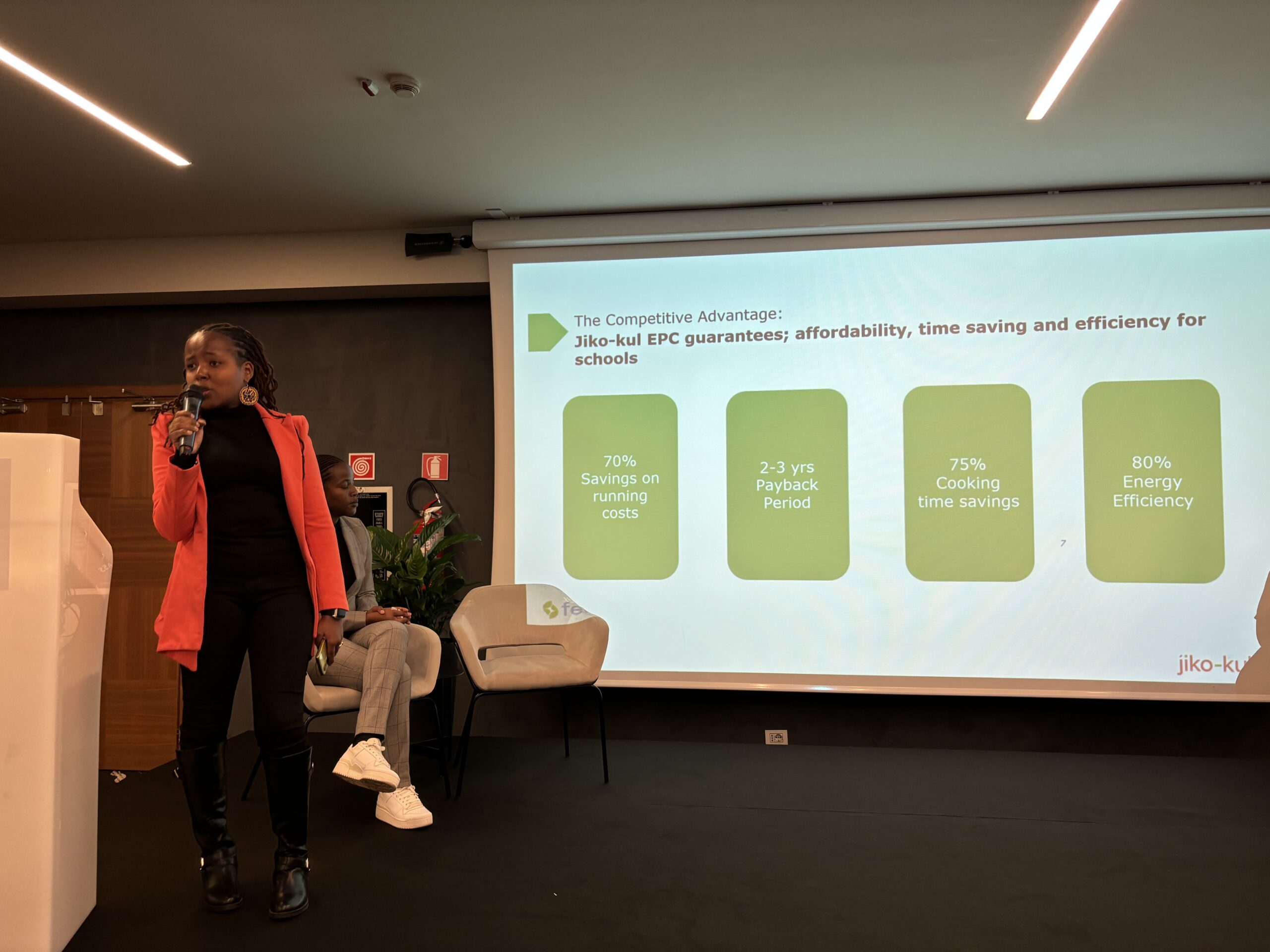
While electric pressure cookers (EPCs) are already revolutionizing institutional cooking through efficiency, their impact multiplies when paired with solar energy.
A solar-powered Jiko-Kul EPC offers:
✅ Zero operational energy costs – solar generation covers daily cooking needs, drastically reducing reliance on grid power or fuel purchases.
✅ Grid stability & resilience – hybrid (solar + grid) systems ensure uninterrupted cooking even during power outages.
✅ Predictable budgets – no fuel price fluctuations; schools can plan expenditures with certainty.
✅ Climate impact – complete elimination of firewood use reduces CO₂ emissions and pressure on local forests.
✅ Health & productivity – clean, smoke-free kitchens improve staff health and morale while saving cooking time for learning.
✅ Scalable infrastructure – solar systems can power other campus needs (lighting, labs, ICT rooms) beyond the kitchen.
Financing the Transition: Making Solar Cooking Affordable
The biggest question for schools is often how to pay for the shift. Feion Green Ventures and our partners have developed flexible, results-driven financing models that lower the barrier to entry:
- Lease-to-Own Model – Schools redirect existing firewood budgets into manageable instalments until they fully own the system.
- Upfront Cash Model – For schools with stronger liquidity, allowing immediate full ownership.
- Bundled Financing with Solar Partners – Through collaborations with partners like Sentimental Energy and financiers such as KCB, we create turnkey solar + EPC packages with integrated funding, ensuring schools receive both clean energy and cooking solutions under one accessible plan.
This approach aligns directly with donor and government goals advancing clean energy access, improving education outcomes, and creating local jobs.
Case Study: Lugulu Girls High School
With more than 2,600 students, Lugulu Girls High School in Western Kenya offers a glimpse into the future of school kitchens.
The Challenge:
Rising firewood costs and inefficient cooking meant long hours, high expenses, and smoke-filled kitchens. Meals for over 2,000 students took up to six hours daily, draining resources and staff energy.
The Solution:
Feion Green Ventures, in partnership with Sentimental Energy, installed a 500-litre Jiko-Kul Electric Pressure Cooker powered entirely by a dedicated solar PV system.
The Results:
⚡ Cooking time reduced from 4–6 hours to under 1 hour.
🌿 Firewood use eliminated – 100% savings on fuel.
💰 Budget savings redirected to learning materials and school development.
💨 Zero smoke – healthier, safer kitchens for staff.
🎓 Improved meal quality and student satisfaction.
As one student remarked, “The food is well-cooked and tender.” A simple comment that captures a profound truth, better meals mean better learning and better futures.
The Opportunity Ahead: Scaling Solar-Powered School Kitchens
Lugulu Girls is not an outlier, it is a prototype for national transformation. If replicated across Kenya’s 40,000+ schools, solar-powered EPCs could:
- Save institutions billions of shillings annually in cooking fuel costs.
- Cut hundreds of thousands of tonnes of CO₂ emissions every year.
- Free up funds for teaching and infrastructure instead of firewood.
- Empower thousands of technicians and local SMEs in clean energy service delivery.
Feion Green Ventures, alongside solar systems providers and financing partners, are working to make this future a reality, one solar-powered kitchen at a time.
A Call to Partners
The future of school cooking in Africa is not firewood. It is solar-powered, clean, efficient, and affordable.
We invite development partners, donors, financiers, and education stakeholders to join us in scaling solar cooking integration from pilot projects to national programs. Together, we can transform institutional kitchens into symbols of climate action, health, and smart spending.
Let’s power the next generation with the energy of the sun.